
How BLIS K12 and BLIS M18 support oral microbiome balance—backed by clinical research
Read time: 8 minutes
The Reality: Periodontal disease affects 20-50% of the global population, with recent data showing a 76% surge in gum disease cases worldwide. Traditional antibacterial approaches are shifting toward microbiome-focused strategies supported by clinical evidence.
The Oral Microbiome Crisis
Periodontal diseases are prevalent both in developed and developing countries and affect about 20-50% of the global population. In the United States specifically, 2 in 5 adults are affected by some form of gum disease, with more than 42% of all adults older than 30 having some form of periodontal disease.
Globally, gum disease cases shot up by over 76%, with a notable rise among women. This isn't just a cosmetic issue—periodontal disease is likely to cause a 19% increase in the risk of cardiovascular disease.
The root cause of most of these cases? Oral microbiome dysbiosis—an imbalance or disruption in the composition and functioning of the oral microbial community.
What Is Oral Dysbiosis?
Your mouth contains hundreds of bacterial species. When your oral ecosystem is balanced, beneficial bacteria dominate and protect your teeth and gums. But when this balance breaks down—due to poor diet, stress, antibiotics, or aggressive oral care—harmful bacteria take over.
Various factors, such as poor oral hygiene, dietary habits, medical conditions, medications, and lifestyle choices, can lead to oral dysbiosis, resulting in common oral health issues like dental caries, periodontal diseases, and halitosis.
This is where oral probiotics come in. Rather than attacking bacteria indiscriminately, they restore the natural balance.
The Science Behind BLIS K12 and BLIS M18
Not all probiotics work for the mouth. BLIS K12 and BLIS M18 are specific strains of Streptococcus salivarius that are naturally found in healthy mouths and have been extensively studied.
How They Work
BLIS K12 and BLIS M18 produce bacteriocin-like inhibitory substances (BLIS) that inhibit the growth of harmful bacteria. These strains can inhibit the adhesion of harmful bacteria to oral tissues, prevent tooth decay-causing bacteria, and inhibit the growth of Candida.
Anti-Inflammatory Effects
Research shows BLIS K12 and M18 decreased interleukin-6 and interleukin-8 secretion in gingival cells challenged by harmful bacteria, and inhibited the toxicity of these bacteria.
Breath Support
BLIS K12 and M18 suppress the release of volatile sulfur compounds—the compounds responsible for bad breath—from oral bacteria.
Clinical Evidence: What the Research Shows
Cavity Risk Reduction
A randomized controlled trial found that BLIS K12 and BLIS M18 probiotics used for three months resulted in a considerable decrease in caries risk, with BLIS K12 showing a statistically significant mean percentage difference compared to control.
Gum Health and Bleeding
A placebo-controlled, double-blind trial evaluated the effect of three months of Streptococcus salivarius M18 supplementation on bleeding and gingival inflammation in individuals with gingivitis. The study found measurable improvements in gingival health markers.
Upper Respiratory Support
A 2024 randomized, double-blind, placebo-controlled trial investigated the efficacy of Streptococcus salivarius K12 in preventing upper respiratory tract infections in healthy adults, finding support for the probiotic's role in respiratory health.
Halitosis Reduction
An in vivo analysis of BLIS M18 in oral cavities demonstrated effectiveness in reducing harmful bacteria counts, supporting its use for breath-related concerns.
Why Delivery Format Matters
Most oral probiotic supplements are swallowed capsules—they pass straight through your mouth to your stomach. This is a fundamental problem: oral probiotics need to contact oral tissues to work.
Chewable formulas allow the beneficial bacteria to dissolve slowly in your mouth, establishing contact with gum tissue, teeth, and the throat. This direct contact is essential for colonization and effectiveness.
This is why lozenges and dissolvable tablets outperform swallowed capsules in research—the bacteria have time to do their job where they're needed.
How to Use Oral Probiotics Effectively
Dosage
Most clinical research uses 1-2 lozenges daily with CFU counts of 1-4 billion per dose. Consistency matters more than dosage—daily use supports microbiome balance better than sporadic use.
Timing
Take oral probiotics after brushing your teeth. This ensures the beneficial bacteria aren't immediately washed away. Many people use them before bed to allow extended contact with oral tissues overnight.
Extended Contact
Don't rinse your mouth for at least 30 minutes after taking your tablet. This allows the bacteria maximum time to establish and adhere to oral tissues.
What to Expect
Clinical trials typically show measurable effects over 3-4 weeks of consistent use. Individual results vary based on baseline oral microbiome composition, diet, oral hygiene habits, and overall health.
The Microbiome Approach vs. Traditional Antibacterials
Traditional Approach (Antibacterial): Kill all bacteria indiscriminately with antimicrobial mouthwash and aggressive oral care.
Problem: This kills beneficial bacteria along with harmful ones, creating an empty ecosystem that harmful bacteria rapidly recolonize. It's like burning down a forest to kill weeds—the forest takes time to recover, but weeds come back immediately.
Microbiome Approach (Probiotic): Support beneficial bacteria so they naturally compete and prevent harmful bacteria from taking over.
This is more like tending a garden—when you have healthy plants (beneficial bacteria) thriving, weeds (harmful bacteria) have nowhere to grow.
Complementary Oral Care Practices
Oral probiotics work best as part of a comprehensive approach:
- Twice-daily brushing: Remove food debris and support mechanical plaque control
- Daily flossing: Address areas your toothbrush can't reach
- Professional cleanings: Every 6 months for thorough removal of tartar
- Low sugar diet: Reduce fuel for cavity-causing bacteria
- Hydration: Support saliva production, your mouth's natural defense system
- Stress management: Stress disrupts oral microbiome balance
The Oral-Systemic Connection
Your mouth doesn't exist in isolation. Research shows that variations in oral microbiota structure can impact not only oral health but also overall systemic health, affecting organs distal to the mouth, such as cardiovascular disease and respiratory disease.
Supporting a balanced oral microbiome is an investment in whole-body health. Your mouth is literally the gateway to your body.
Important Disclaimers
These statements have not been evaluated by the Food and Drug Administration. This product is not intended to diagnose, treat, cure, or prevent any disease.
Oral probiotics are a supplement, not a replacement for professional dental care. Regular dental checkups, professional cleanings, and proper oral hygiene are essential. If you have a dental condition, are pregnant or nursing, or have a compromised immune system, consult your dentist or healthcare provider before using oral probiotics. Keep out of reach of children. Individual results may vary.
Restore Your Oral Microbiome Balance
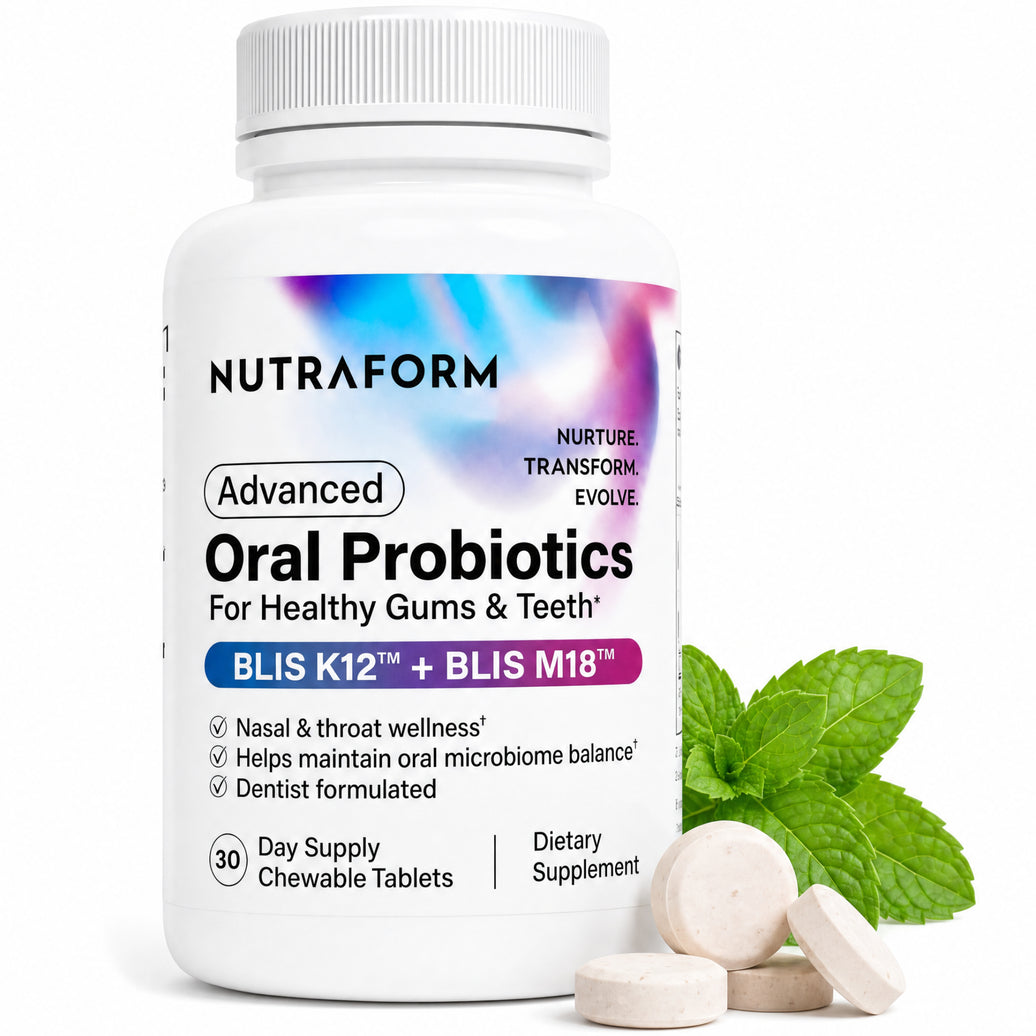
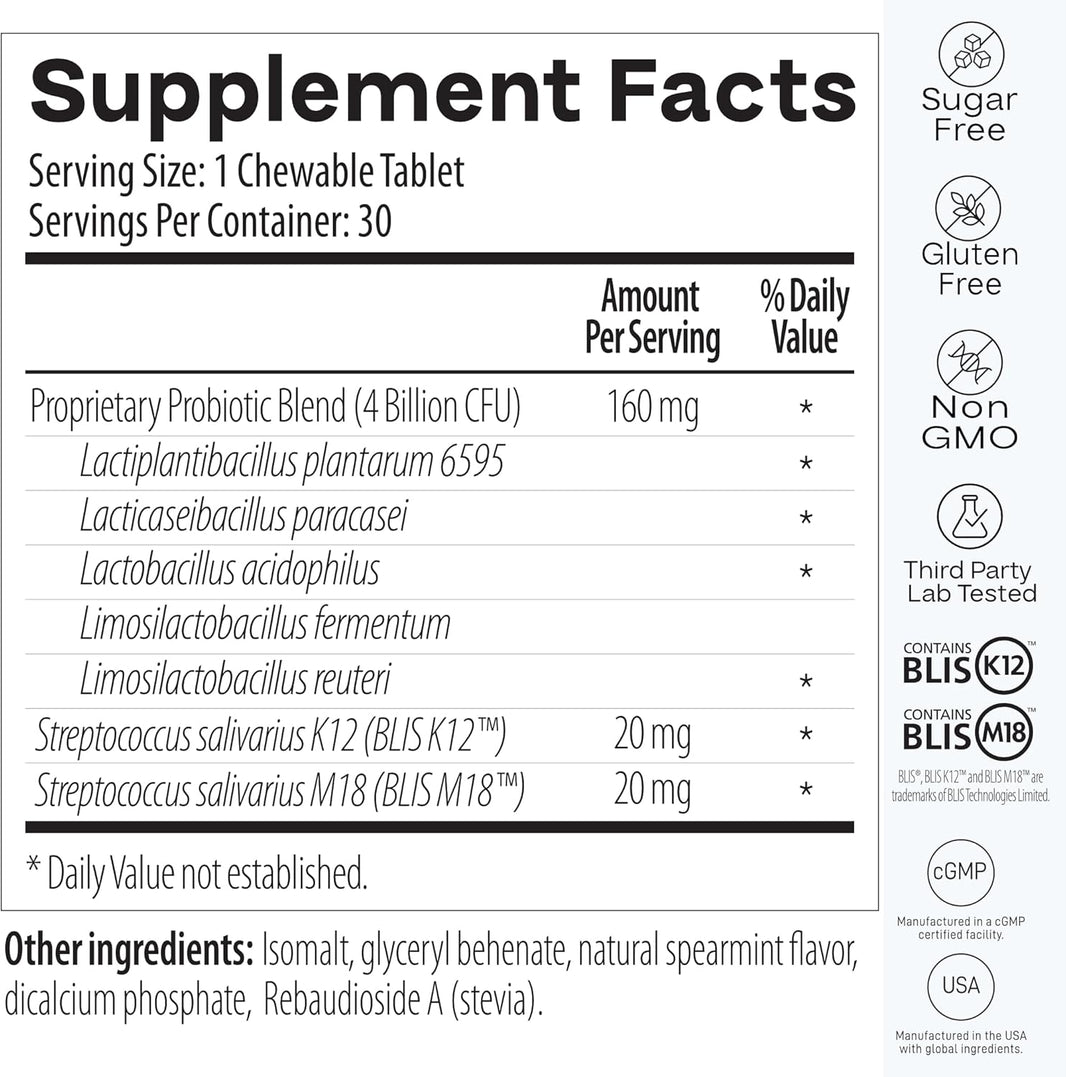
NUTRAFORM Oral Probiotics deliver 4 billion CFU of clinically-researched BLIS K12 and BLIS M18 strains—the exact strains studied in peer-reviewed clinical trials. Chewable format for direct oral delivery, zero fillers, complete transparency.
Consult with your dentist to determine if oral probiotic supplementation is right for you.