


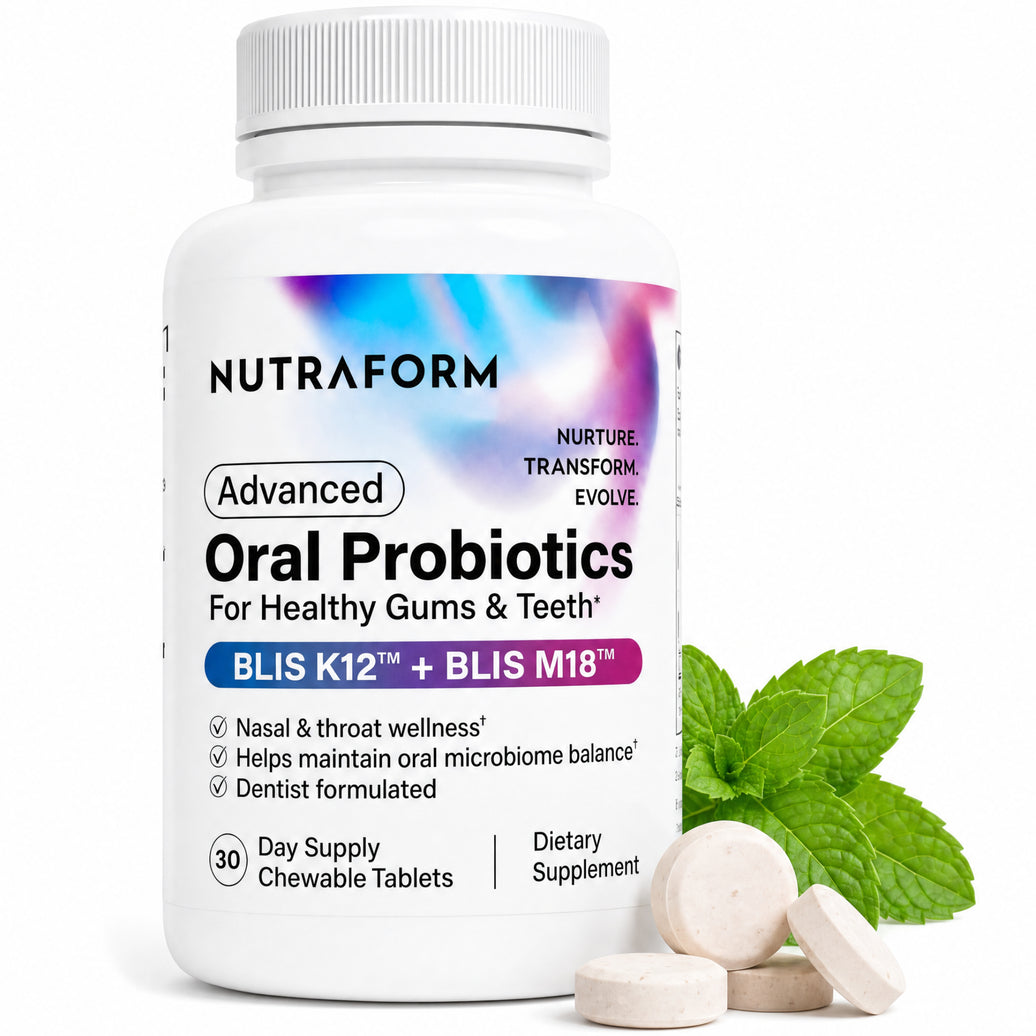

How two of the world's most researched oral probiotics prevent infections and support microbiome balance—backed by 30+ peer-reviewed studies
Read time: 9 minutes
The Reality: Strep throat, tonsillitis, and upper respiratory tract infections are among the most common infections globally. Yet most treatment approaches focus on killing bacteria indiscriminately. Clinical research shows a smarter strategy: introducing specific beneficial bacteria that prevent harmful pathogens from taking hold.
The Oral Microbiome: Not All Bacteria Are Your Enemy
Your mouth and throat are home to hundreds of bacterial species. When this ecosystem is in balance, beneficial bacteria like Streptococcus salivarius dominate—protecting you from harmful invaders like Streptococcus pyogenes (the bacteria responsible for strep throat) and other respiratory pathogens.
But modern life disrupts this balance. Antibiotics, stress, poor diet, and aggressive oral care protocols eliminate not just harmful bacteria but beneficial ones too. This creates an opening for pathogenic bacteria to colonize and cause infections.
This is where BLIS K12 and BLIS M18 enter the picture. These aren't generic probiotics. They're two specific, patented strains of Streptococcus salivarius developed by BLIS Technologies in New Zealand, backed by over 30 peer-reviewed clinical studies demonstrating their ability to prevent infections and support oral health.
Meet BLIS K12: Your Throat's Natural Defense
BLIS stands for "Bacteriocin-Like Inhibitory Substances"—essentially, naturally-produced compounds that allow good bacteria to defend their territory against pathogens. BLIS K12 produces two specific bacteriocins: salivaricin A2 and salivaricin B. These peptides directly inhibit the growth of Streptococcus pyogenes, the primary cause of strep throat.
How K12 Works: After you take it, the bacteria colonize your oral cavity, tongue, tonsils, and upper respiratory tract. Once established, they compete with harmful bacteria for space and nutrients while producing bacteriocins that actively inhibit pathogens.
Clinical Origins: BLIS K12 was first isolated from individuals who never contracted strep throat despite repeated exposure—researchers discovered these people had significantly higher populations of this specific strain in their mouths.
BLIS M18: Dental Health and Cavity Prevention
While K12 specializes in throat defense, BLIS M18 is engineered for dental health. This strain specifically targets Streptococcus mutans—the cavity-causing bacteria—and produces compounds that reduce plaque accumulation and improve salivary pH.
M18's Key Benefits: Reduces gingival bleeding, decreases plaque accumulation, improves salivary pH and buffering capacity, and significantly lowers cavity-causing bacteria counts in saliva.
The beauty of using both strains together: K12 protects your throat and upper respiratory system while M18 supports dental health. You get comprehensive oral ecosystem support.
Clinical Evidence: What 30+ Studies Actually Show
Upper Respiratory Infection Prevention
A 2024 randomized controlled trial with 112 healthy adults aged 19-25 found that BLIS K12 supplementation prevented upper respiratory tract infections, with therapeutic adherence significantly correlating to increased protective effects. In children specifically, 6-month administration of BLIS K12 was associated with significant reductions in streptococcal pharyngo-tonsillitis (16% vs 48% in controls) and acute otitis media (44% vs 80% in controls).
Gingival Health and Plaque Reduction
A 2024 randomized clinical trial found 3-month BLIS M18 supplementation produced significant decreases in gingival bleeding and plaque scores versus controls. In children aged 3-6, BLIS M18 significantly reduced salivary Streptococcus mutans counts while positively modulating salivary pH and buffering capacity.
Cavity Risk Reduction
Both K12 and M18 showed improved "chance to avoid new cavities" scores versus controls after 90 days of daily lozenge use in a randomized trial, indicating meaningful reduction in caries risk.
Halitosis (Bad Breath) Reduction
In-vitro studies showed BLIS K12 and M18 significantly suppressed volatile sulfur compounds and virulent protease activity from Porphyromonas gingivalis—key drivers of periodontal disease and bad breath.
Immune Function in Athletes
A 2023 randomized double-blind study found BLIS K12 increased salivary IgA (the main immune factor in saliva) in active young subjects performing high-intensity training, suggesting enhanced mucosal immune defenses during stress periods when infection risk increases.
Anti-Inflammatory Effects
Research shows when BLIS K12 or M18 were co-administered with oral pathogens, there were significant reductions in IL-6 and IL-8 release—inflammatory markers associated with gum disease. Importantly, BLIS K12 did not alter the salivary microbiome or induce immune activation when administered, maintaining healthy microbiome diversity.
Why Strain Specificity Matters
Not all Streptococcus salivarius strains are equal. Within a single bacterial species, different strains can have entirely different—even opposite—effects. The K12 and M18 designations aren't marketing labels; they're scientifically precise identifiers of unique organisms with documented, reproducible characteristics.
Generic "Streptococcus salivarius" on a label means nothing. Always look for the specific strain designation (K12, M18, etc.) backed by clinical research. This is the difference between evidence-based supplementation and marketing-driven claims.
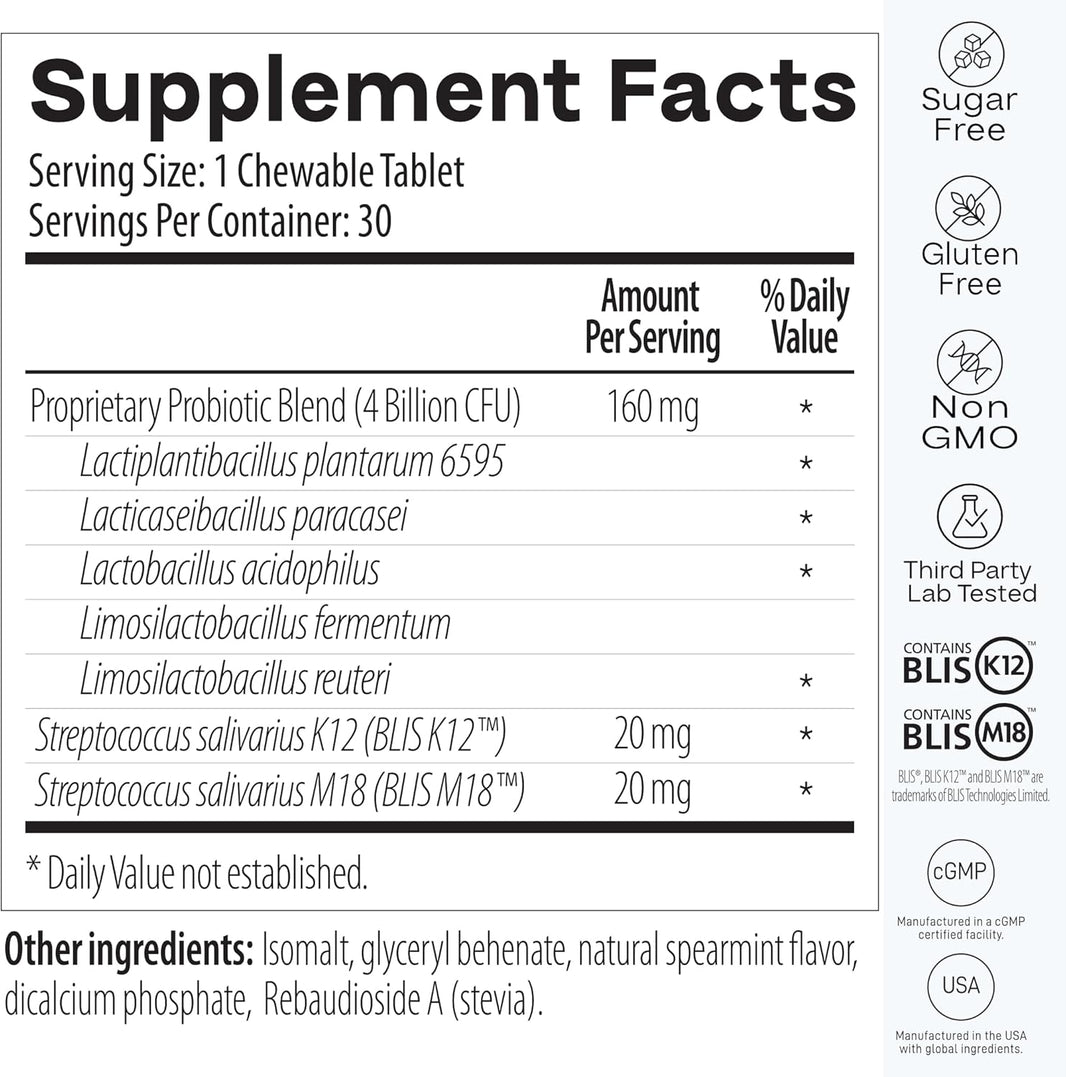
4 Billion CFU: What This Means
CFU stands for "Colony Forming Units"—the standard measure of viable, living bacterial cells per dose. Clinical research on BLIS K12 and M18 has used 1-5 billion CFU daily with positive outcomes. A 4 billion CFU formulation is precisely calibrated to this proven research range.
This is important: unlike gut probiotics that must survive stomach acid and compete for intestinal space, oral probiotics colonize directly at the site of action—your mouth and throat. Higher CFU counts don't necessarily mean better results; what matters is sufficient viable bacteria to establish colonization.
How to Use for Maximum Effectiveness
Timing
Take after brushing your teeth—ideally before bed. This ensures the bacteria aren't immediately washed away and have extended contact with oral tissues overnight.
Chewing & Dissolving
Chew the tablet slowly and let it dissolve fully in your mouth. Don't swallow immediately. This maximizes contact between the beneficial bacteria and your oral mucosal surfaces.
The 30-Minute Wait
Do not eat or drink for 30 minutes after taking your tablet. This critical window allows the bacteria time to adhere to oral tissues and begin colonization without being washed away.
Timeline for Results
Many users notice fresher breath within 1-2 weeks. Improvements in throat health and reduced infection frequency typically become evident after 1-2 months of consistent daily use. Clinical studies showing significant improvements used supplementation periods of 3-6 months.
Consistency
Daily use is essential. Clinical trials were conducted with consistent daily supplementation. Missing doses or sporadic use reduces effectiveness because bacterial colonization requires consistent reinforcement.
Who Benefits Most
BLIS K12 and M18 are particularly beneficial for:
- People with recurrent sore throats or strep infections
- Athletes and highly active individuals (who experience increased URTI frequency)
- Those with history of ear infections (otitis media)
- Anyone prone to cavities or gum problems
- Children in school or daycare (high infection exposure)
- Individuals recovering from antibiotics (which disrupt oral microbiome)
- Anyone wanting to support oral and respiratory health proactively
The Microbiome Strategy vs. Antimicrobial Approach
Traditional Approach (Antimicrobial): Kill all bacteria indiscriminately with antibiotics, antimicrobial mouthwash, aggressive antibacterial treatments. Problem: This eliminates beneficial bacteria along with harmful ones, creating an empty ecological niche that pathogenic bacteria rapidly recolonize.
Microbiome Strategy (Probiotic): Support and reinforce beneficial bacteria so they naturally compete and prevent harmful pathogens from establishing. This is more sustainable, requires no antibiotics, and supports long-term microbiome health. It's the difference between fighting an infection and preventing one from occurring.
Important Disclaimers
These statements have not been evaluated by the Food and Drug Administration. This product is not intended to diagnose, treat, cure, or prevent any disease.
Oral probiotics support immune function and oral health but do not replace professional dental care, antibiotics when medically necessary, or consultation with healthcare providers. If you have recurrent infections, immunocompromised status, are pregnant or nursing, or have specific health conditions, consult your healthcare provider before starting supplementation. Keep out of reach of children. Individual results may vary.
Protect Your Mouth and Throat with Clinically-Studied Strains
NUTRAFORM Oral Probiotics deliver 4 billion CFU of BLIS K12 and BLIS M18—the exact strains studied in 30+ peer-reviewed clinical trials. Full transparency on strain identification, natural spearmint flavor, sugar-free, formulated to clinical standards.
Consult your healthcare provider to determine if oral probiotic supplementation is right for you.